
Böhler and the Dead Singer
- thomasvonriedt
- May 24
- 7 min read
A Chief Inspector Böhler Crime Novel – Case #5
The Main Characters
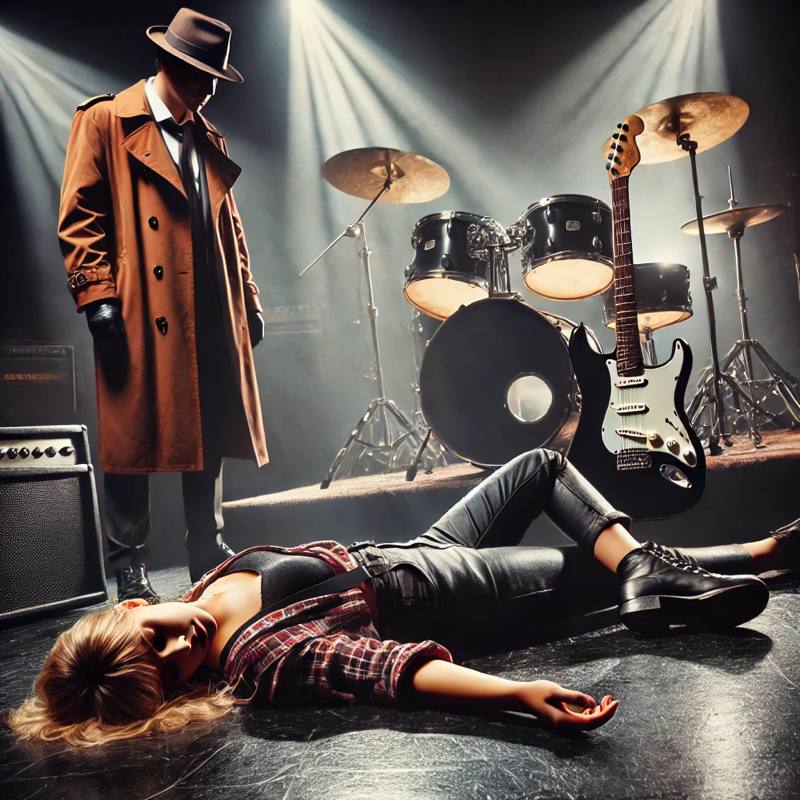
Chief Inspector Franz Böhler: Gruff and headstrong, wears a trench coat like Maigret, 60 years old, “old school”, loves playing Jass at the Metzgerhalle
Assistant Fridolin Blumer: Cheerful by nature, almost 30, adored by the young female police assistants, rides a Vespa, from the canton of Glarus, and deeply admires his boss
Gloria Meyer: Forensics technician, smart, young, beautiful—Fridolin Blumer’s dream woman
Hannes Kurz: Head of the narcotics department
The Band
Gregor Huber: The manager, an old colleague of Benny
Benny Zuberbühler: The drummer and bandleader
Sara Zuberbühler: His wife and lead singer, once in a relationship with Philip
Bella Canonica: The young, attractive singer
Hans Keller: The bass guitarist, idolizes the drummer
Philip: The rhythm guitarist, a drug addict
Bernd: The German lead guitarist, has a thing for Bella
Richi Surber: The roadie—he knows what’s going on
Herbert Sager: The promoter, only cares about business
Milan Batic: The driver, secretly takes photos
Summary
Chief Inspector Böhler investigates the death of the young singer Bella and uncovers clues pointing to drugs, jealousy, and relationship drama. Why did she die—could the drummer be the killer? “Let’s rock and roll, Blumer,” says Böhler as he dives into the murky world of the music scene. Once the case is solved, Chief Inspector Böhler looks forward to a cold beer and a round of Jass with the “Schällenboys” at the Metzgerhalle.
The Call
Detective Franz Böhler was sitting in his usual spot at the Metzgerhalle, a neat stack of Jass cards in front of him. The game was going his way when his cellphone buzzed on the table.
He hated cellphones. Always urgent. Always interrupting. Grumbling, he answered. “Böhler. What?”
On the other end, Fridolin Blumer—bubbly as ever.
“Boss, we’ve got a dead girl. Concert grounds. A singer. Pretty well-known, I think. Bella Canonica from that band… uh, Blue Cherries or something. They’ve got a great sound—I saw them at the Rümlang Open Air.”
Böhler sighed, reached for his trench coat, and muttered, “I’m on my way.”
Bella Canonica was lying behind the stage, next to a toppled steel rig. Crushed—by a speaker, maybe? A large pool of blood had spread beneath her pretty head; only a few last drops still oozed from a gaping wound.
Böhler saw no signs of forced entry, no visible struggle, nothing that clearly indicated what had happened. But he knew Gloria from forensics—sharp as a tack—would take a closer look.
“No witnesses—this one’s going to be a tough nut to crack,” he murmured.
And on his day off, of all days—when he’d just been on a winning streak at Schieber.
At the Scene
The band had just arrived and was getting ready for soundcheck. Their evening performance was supposed to kick off a major tour. But now, everything had changed.
The manager, Gregor Huber, was gesturing wildly, struggling to put the unthinkable into words.
Bella had been the star—sexy, charismatic, with a voice that gave you chills. For weeks, rumors of a solo career had been circulating Gregor was supposedly helping her make the move.
Böhler looked over the group: tense, fragmented, off somehow. There was more going on beneath the surface. Fridolin Blumer, Böhler’s assistant, had now arrived on his beloved Vespa, rolling it nearly all the way onto the stage.
Moments later, Gloria Meyer pulled up in her new Mini and stepped into action—cool, composed, all business. Fridolin, as giddy as a schoolboy, stole glances at his crush as she meticulously secured the crime scene. Beautiful, young, and razor-sharp—his heartbeat faster.
“Look at her, boss! Total pro!” he whispered.
Böhler smirked. “Save the swooning, Blumer. That’s what we pay her for.”
As blunt as it sounded, he didn’t mean it harshly. But every now and then, he had to bring his young assistant back down to earth.
Gloria found the first bits of evidence: fibers from a dark green sweater under Bella’s fingernails, a smashed phone with messages from Bernd—the German lead guitarist—jealous and accusing. The tech team would be able to dig out even more from the phone’s memory.
“Well, well,” Böhler muttered. “Looks like the young lady had cocaine on her. There’s white residue in her purse.”
He scratched his chin. Cocaine. Jealousy. Fame. A volatile cocktail.
Blumer, meanwhile, was taking down the band members’ personal details and recording some initial statements.
Böhler, never one to do things halfway, ordered their detention. Deep down, he was looking forward to the interrogations back at the station.
Musicians, he thought, they’re all a little unhinged. Sex and Drugs and Rock and Roll—Ian Dury had it right back in the wild ’70s.
Early Findings
Blumer was worried about missing the interrogation. As the band members were being transported to headquarters in a police van, he jumped on his Vespa and took the fastest route there. No way was he going to miss watching his boss in action. He gave a quick wave to Gloria, who was still fully immersed in collecting tiny traces of evidence that might help crack the case.
The city’s police headquarters—once a 19th-century military barracks—still retained a fortress-like air. Part of it now served as a detention center. The austere architecture, stark furnishings, and cold atmosphere made it clear: no mercy for wrongdoers.
Officers led the band members into bare bones holding cells, letting them stew a bit before calling them in for questioning.
In the chilly interrogation room, the first round of interviews began. A camera recorded everything: body language, word choices, hesitation—all preserved for later analysis.
Before long, a fractured picture of the group began to emerge:
Bernd, the German lead guitarist, had been hopelessly in love with Bella. She rejected him—he wasn’t her type—and he couldn’t understand why.
Philip, the rhythm guitarist, was a full-blown addict. He owed money to nearly everyone in the band—and to some shady characters on the side.
Hans Keller, the bassist, idolized Benny the drummer. The two were the band’s rhythm engine and worked in perfect sync. But Hans resented the spotlight always being on Bella—nobody seemed to notice his contributions.
Benny Morelli, the drummer, was the glue holding the group together, constantly stepping in to mediate and maintain peace.
Gregor Huber, the manager, wanted to keep Bella as the band’s frontwoman—but he also knew she was planning to go solo. Smart enough to see her potential, he quietly encouraged her ambitions.
Herbert Sager, the promoter, had invested heavily in the band. Any scandal could ruin him.
Richi Surber, the roadie, knew his people well—heard things, saw things—but stayed completely silent during questioning.
Milan Batic, the driver, had been secretly taking photos—possibly for blackmail, or maybe just gathering material for a photo book on the band. He was Richi’s closest friend.
The interrogations revealed one key moment:
According to Richi, there had been a loud, explosive argument during rehearsal the night before. Bella had accused Philip of drug abuse and incompetence, telling him he was putting the band’s future at risk. Philip lost it—yelled, threatened her, and then stormed off.
Plenty of clues. But still no hard evidence.
Böhler released the group—for now. They had a concert to play that night, with a hastily revised set list.
Crucial Clue
Apparently, it wasn’t the first blow-up within the Blue Cherries.
Manager Gregor Huber had repeatedly needed help from Benny Morelli to rein in the volatile bassist, Hans Keller. Hans was emotionally unstable—riding waves of frustration and self-doubt—and often had to be talked down and built back up by the others.
Thanks to solid alibis, Detective Böhler and his assistant Blumer were able to quickly narrow down the list of potential suspects.
Blumer imagined the drug-addicted Philip returning after their argument, vengeful and determined to show Bella that the band couldn’t function without him. In his mind, the group’s sound depended on his unique playing style.
“Blumer, you might be right,” Böhler said, “but without Bella’s stage presence and charisma, he’d be a nobody too. I think you’re letting the addiction cloud your judgment. What if Milan had secretly taken nude photos of her and tried to blackmail her? She might’ve fought back—and during the struggle, things got out of hand.”
Over coffee in the precinct cafeteria, they bounced around more theories about Bella’s death.
Just then, Hannes Kurz, head of the narcotics division, joined them and dropped a report on the table.
“It wasn’t cocaine,” he said, biting into a butter croissant. “Just face powder—crumbs from a compact.”
Blumer’s eyes lit up as he spotted Gloria walking in.
“She’s got more for us—I bet on it,” he said, eager for any excuse to be near her.
“Well, well—Sherlock Holmes and Dr. Watson deep in deduction,” she teased. “Looks like you two could use a Bönisch to crack the case.”
She was aware of the soft spot Böhler had for her and occasionally allowed herself a sharp quip or two.
“I found some leads you’ll definitely want to follow up on,” she said, sliding into a seat.
“There were photos on Milan’s camera—shots of Bernd and Bella in a heated argument. He had her by the arm rough. And those green fibers under her nails? They match Bernd’s sweater.”
“I knew it!” Böhler said. “It wasn’t about drugs or blackmail—it was hormones.
Blumer, let’s go. We’re heading to the concert. I need to find out what really happened between Bernd and Bella.”
Quick Confession
The club was sold out.
News of Bella’s death hit the audience like a gut punch.
Benny and Hans took over vocals—technically solid, but devoid of soul.
Only during one song, Someone Like You, did Benny briefly come to life.
But everyone knew this was the end of the Blue Cherries.
Backstage, Böhler and Blumer caught Bernd with packed suitcases, trying to slip away.
The detective, in his calm and unmistakable way, looked Bernd in the eye and said,
“Well, Bernd. Time to clear your conscience.”
The words hit home. Bernd collapsed. He said he’d just wanted Bella to take him seriously—both as a musician and a man. But she had mocked him, again and again. In a burst of anger, he struck her. He shoved her. She stumbled into a steel rig, which toppled—pulling a heavy speaker down with it. It struck her temple. She went down.
He ran, convinced she was dead.
“I just wanted her to see that I loved her… I ruined everything… everything.”
“Take him away,” Böhler said.
“Blumer, case closed.”
Back at the Metzgerhalle
Finally, back at the Metzgerhalle, Detective Böhler and Fridolin Blumer sat at their usual table while Barbara served them each a Kafi Luz. Blumer was still going on about Gloria.
Böhler grinned and muttered, “Better stick to cards, Blumer. Women will drive you crazy—just like Bella did her guitarist.”
In the streets of Zurich, crime didn’t go unpunished—if men like Detective Böhler and his loyal assistant were out there, protecting the city and its people, sharp-eyed and committed to justice.
What case would they solve next?
©thomasvonriedt 2025
Image Dall-e


Comments